
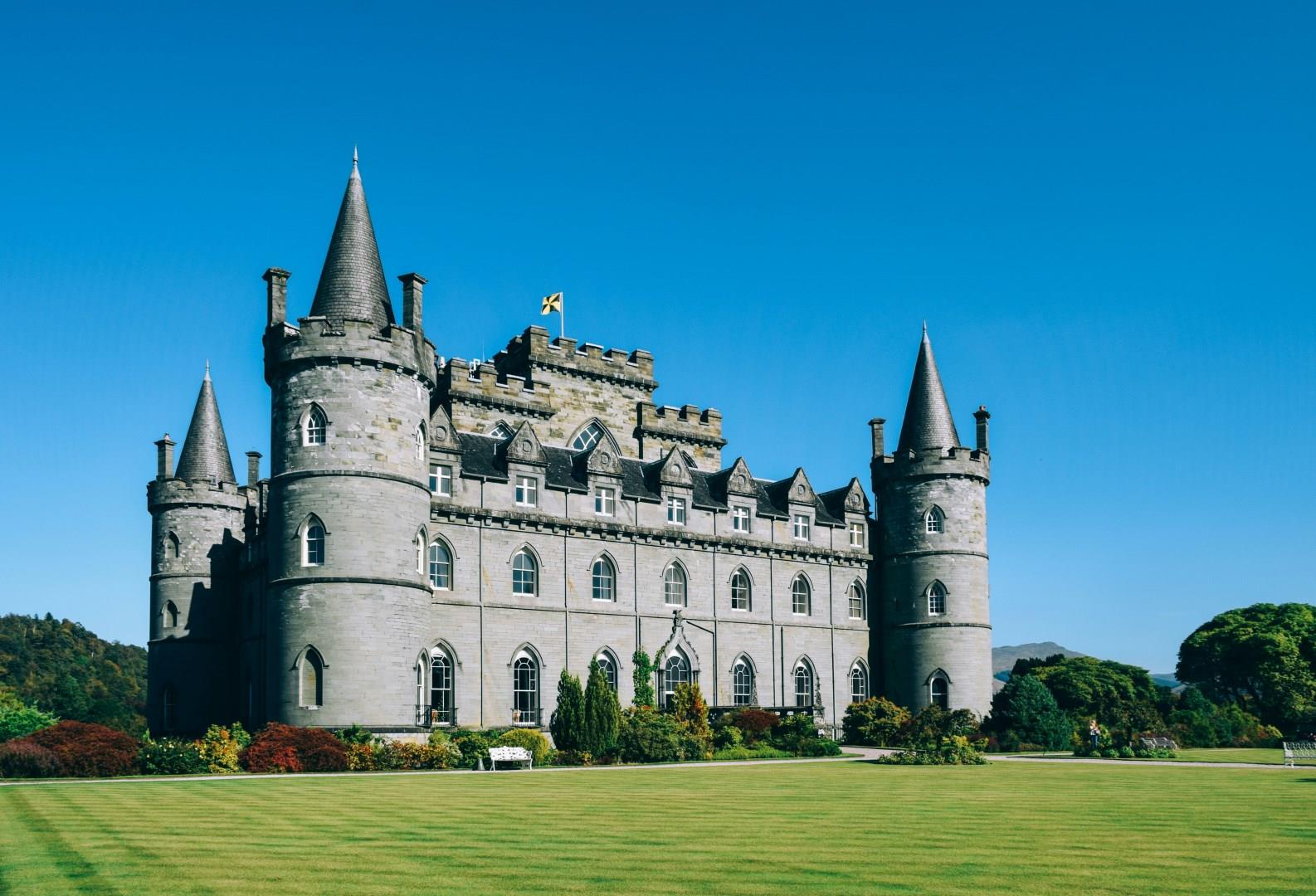
Inveraray
Inveraray, a small town on the western shore of Loch Fyne in Argyll and Bute, Scotland, offers visitors a glimpse into 18th-century planning and Highland heritage. Built largely in the mid-1700s under the direction of the 3rd Duke of Argyll, the town features Georgian architecture, wide streets, and an unusual level of symmetry for a rural Scottish settlement. The main street, lined with whitewashed buildings, leads down to the loch’s edge, where fishing boats and leisure vessels come and go.

Taormina
Taormina, with its hilltop location above the Ionian Sea, is easily one of Italy's most beautiful places. As it's packed with people in the summertime, recommended months to visit include April and September.

London
London, Ontario, nestled along the Thames River, is a city brimming with charm and diverse experiences. Known as the "Forest City," it boasts an impressive array of green spaces, including the expansive Springbank Park, which offers picturesque trails, gardens, and the renowned Storybook Gardens—a whimsical spot for families and children.

Torres Del Paine
This is a wild and beautiful area unlike anywhere else in the world. Torres del Paine lies between the central spine of the Andes, nearly buried under a massive ice cap and the steppes of Southern Patagonia.

Sarajevo
Sarajevo, the capital of Bosnia and Herzegovina, is a city where history, culture, and resilience converge. Often called the "Jerusalem of Europe," Sarajevo is a place where East meets West, reflected in its diverse architecture, which seamlessly blends Ottoman, Austro-Hungarian, and modern influences.
