
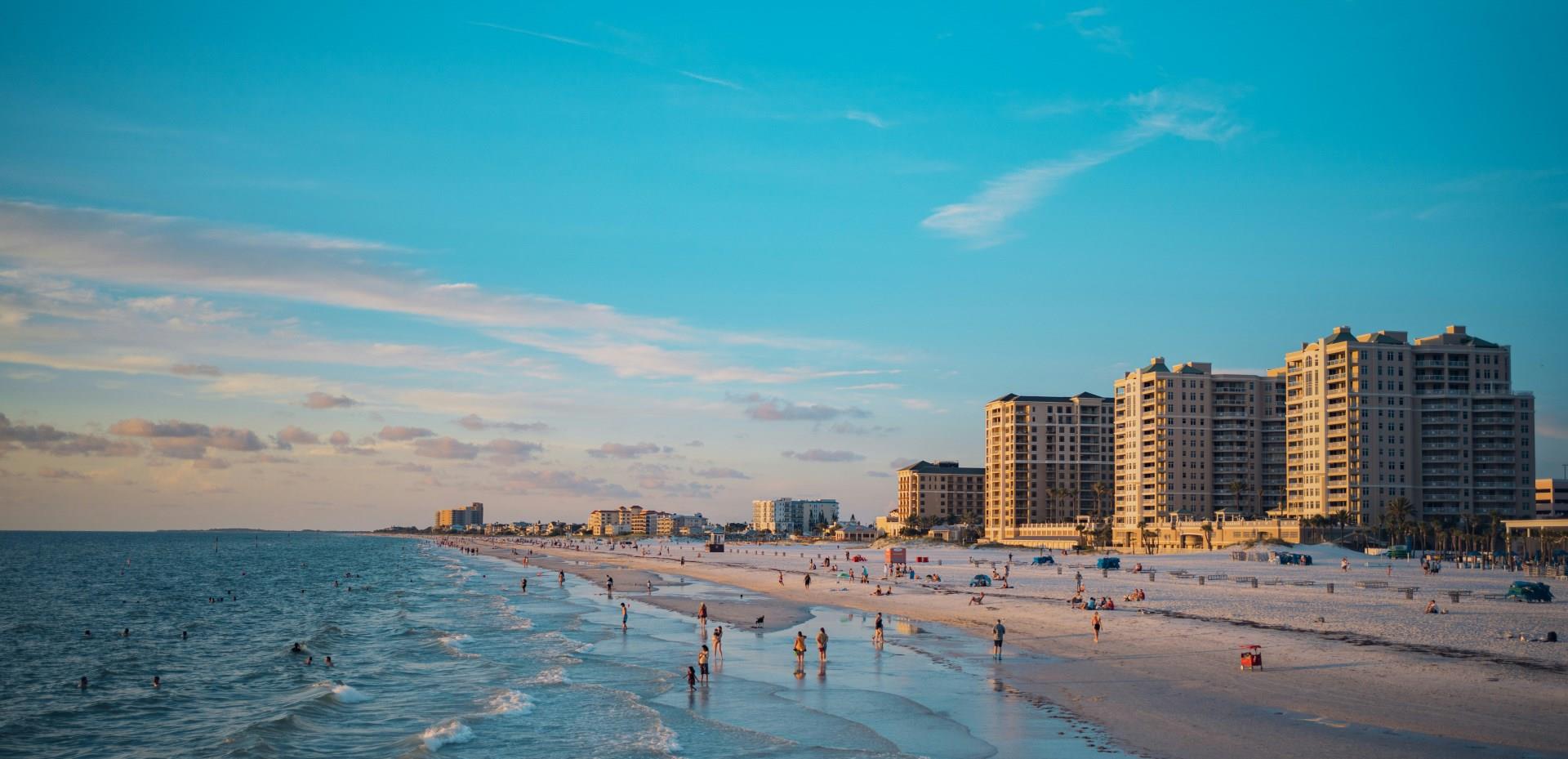
Clearwater
Clearwater, Florida, is a sun-drenched gem on the Gulf Coast, known for its pristine beaches and vibrant atmosphere. At the heart of Clearwater's allure is its Clearwater Beach, often heralded as one of the top beaches in the United States. With its powdery white sands and crystal-clear waters, it's a paradise for beachgoers and water sports enthusiasts alike. The beach offers a bustling promenade, where visitors can enjoy everything from fresh seafood to lively street performances.

Glenwood Springs
Glenwood Springs, Colorado, is a picturesque resort town famous for its geothermal springs. Nestled in a scenic canyon of the Rocky Mountains where the Colorado and Roaring Fork Rivers meet, Glenwood Springs will enthrall you with its natural beauty, including towering red sandstone cliffs, snow-capped mountains, and lush forests.

Washington D.C.
Washington, D.C., the vibrant capital of the United States, offers a perfect blend of history, politics, and culture that makes it a must-visit destination for travelers. Known for its iconic landmarks, such as the Lincoln Memorial, the Washington Monument, and the U.S. Capitol, D.C. offers endless opportunities to explore the country’s history through its architecture and museums.

Quintana Roo
Quintana Roo, nestled on the Caribbean coast of Mexico’s Yucatán Peninsula, is a paradise that seamlessly blends ancient history with modern luxury. The state is perhaps best known for its glittering beaches and turquoise waters, epitomized by destinations like Cancún and Playa del Carmen.

Cape Horn
Located off the southern coast of Chile, Cape Horn is a coastal headland on Isla Hornos, the southernmost island in the Tierra del Fuego archipelago. The Cape Horn Monument provides a spectacular panoramic view of the Pacific and Atlantic Oceans. This rocky cliffside is a popular stop for Antarctic and South American cruises.
