
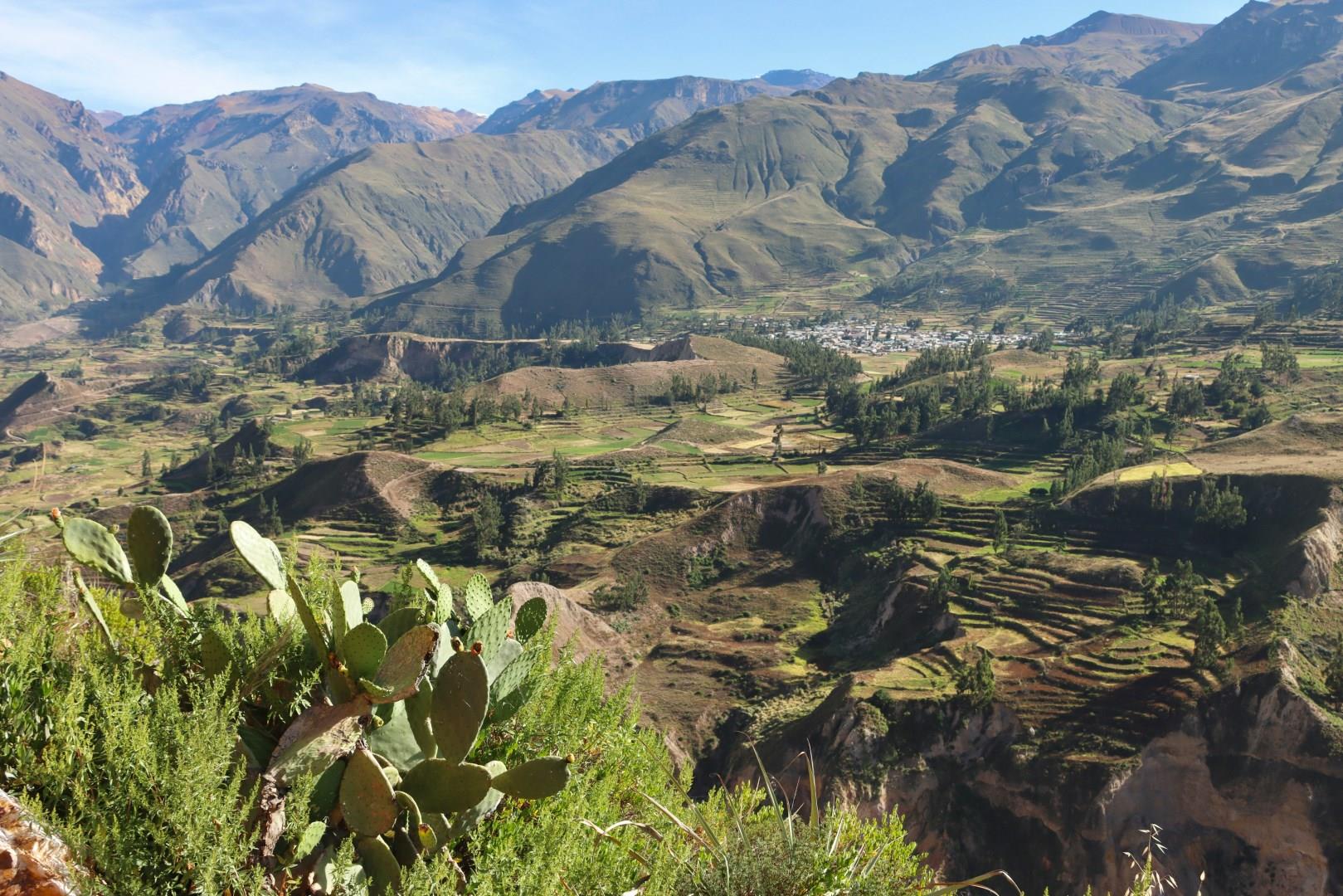
Colca Canyon
Colca Canyon, located in southern Peru’s Arequipa region, is one of the deepest canyons in the world, twice as deep as the Grand Canyon in some areas. What makes it stand out even more is how human settlements have coexisted with the landscape for centuries. Along its walls, pre-Inca agricultural terraces still hold crops like corn and quinoa. One of the main draws of the canyon is the opportunity to see Andean condors in flight.

Arequipa
Arequipa, known as the "White City," is built from sillar, a pale volcanic stone that glows in the sunlight. This architectural detail gives the historic center its striking appearance and has earned it recognition as a UNESCO World Heritage Site. Towering above the city is the perfectly symmetrical Misti Volcano, which, along with two neighboring peaks, forms a dramatic backdrop.

Manta
Located on Ecuador's central coast, Manta is a port city frequented by many South American cruises. Manta is known for its delectable seafood and variety of pleasant beaches.

Trogir
Nestled along Croatia’s stunning Dalmatian Coast, Trogir is a UNESCO World Heritage Site that offers an enchanting blend of history, architecture, and Mediterranean charm. Founded by Greek settlers in the 3rd century BC and later shaped by Roman, Venetian, and Croatian influences, Trogir’s Old Town is a labyrinth of narrow cobblestone streets, captivating medieval architecture, and vibrant piazzas. At its heart stands the Cathedral of St. Lawrence, a masterpiece of Romanesque and Gothic design w

Marsaxlokk
Nestled along the southeastern coast of Malta, Marsaxlokk is a charming fishing village that offers an authentic glimpse into the island's maritime heritage. Renowned for its picturesque harbor filled with traditional "Luzzu" boats painted in vibrant blues, reds, and yellows, Marsaxlokk is a feast for the senses. These iconic boats, each adorned with the Eye of Osiris for protection, are a symbol of Malta’s deep-rooted cultural ties to the sea.
