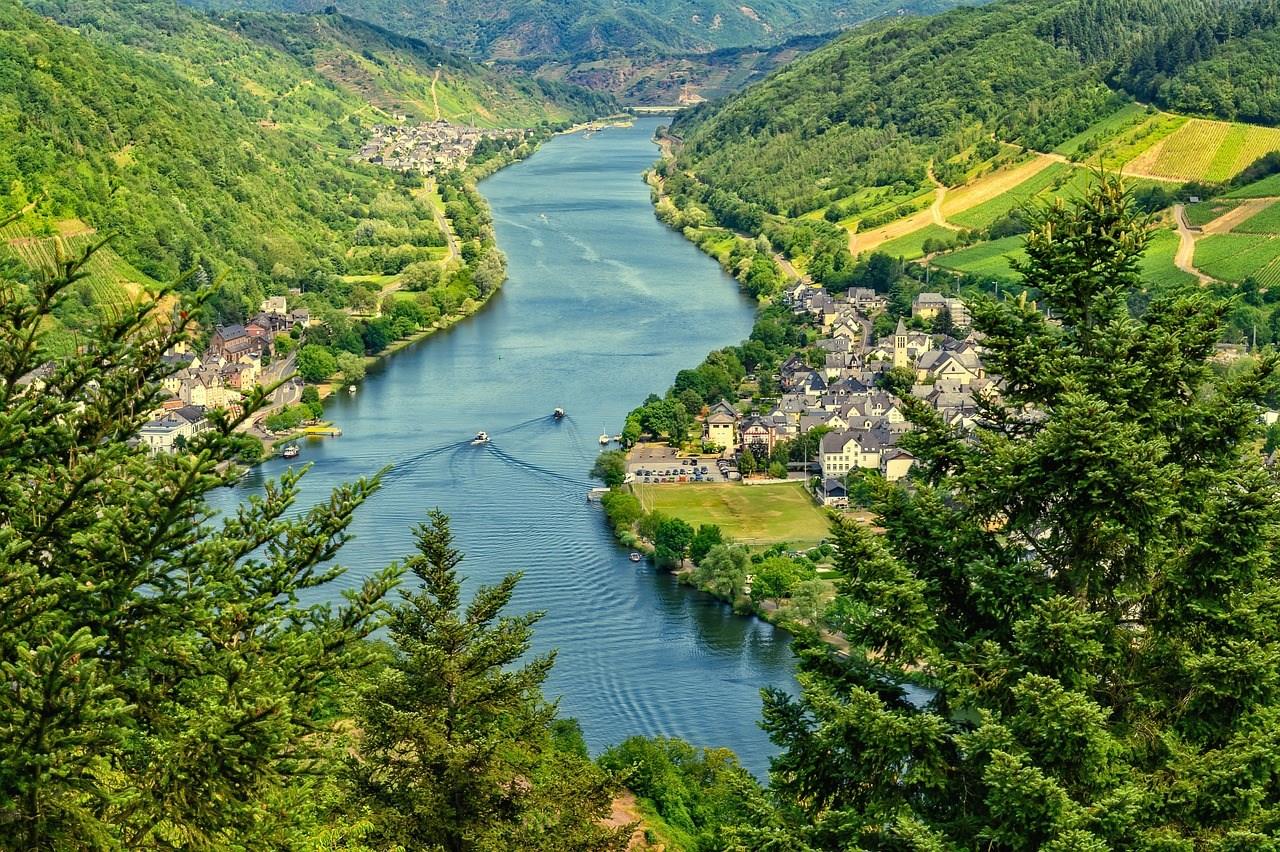
Moselle River
A tributary of the Rhine, the Moselle River flows through France, Luxembourg and Germany. The Moselle also lends its name to a region of France, a valley which it bisects, and a wine produced along its banks.

Breisach
This quaint town on the Rhine is the gateway to the Black Forest and lies halfway between Freiburg and Colmar. As you walk the cobblestone streets, stop to sample local schnapps made from fermented pears or cherries and the distinctive smoky ham of this region. St. Stephan's Cathedral perches on a hillside and is the exquisite centerpiece of the town.

Dominica
Dominica, known as the “Nature Island of the Caribbean,” is a haven for eco-tourists and adventure seekers. Nestled between the French islands of Guadeloupe and Martinique, this lush island boasts a remarkable landscape of volcanic mountains, dense rainforests, and stunning waterfalls. Dominica’s most iconic natural wonder is the Boiling Lake, the second-largest hot spring in the world.

Skagen
Skagen, Denmark, is a picturesque coastal town where the North Sea meets the Baltic Sea, offering visitors a unique natural experience unlike any other. Known for its stunning light, which has attracted artists for centuries, Skagen is a place where art, nature, and history converge in perfect harmony.

Rarotonga Island
Rarotonga, the vibrant heart of the Cook Islands, offers visitors a chance to experience island life with striking scenery and rich tradition. This volcanic island is only 32 kilometers around, making it easy to explore by scooter or bicycle in a single day. From the lush mountains of the interior to the lagoon that wraps around the coast, Rarotonga feels intimate but never short on discovery.